
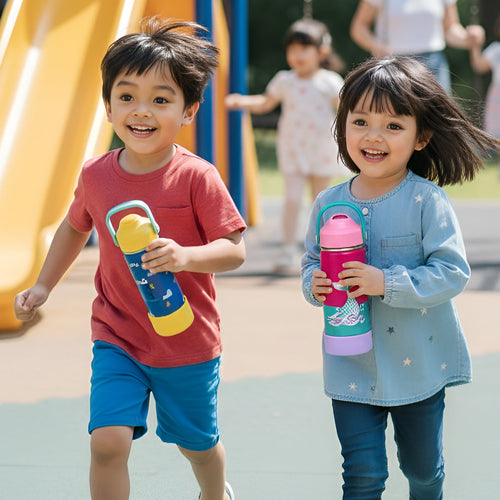
You want your child to stay hydrated. But is the bottle they're drinking from actually safe? With so many options and so much confusing information, it's hard to know what to trust.
Simply visit any kid-oriented shop or browse through the web marketplace, and there will be hundreds of water bottles, either made of plastic and available in all kinds of colors or manufactured from stainless steel in a variety of sizes, with each brand claiming "BPA-free". As for the parents who want to buy an appropriate bottle for their baby, the task might seem quite daunting.
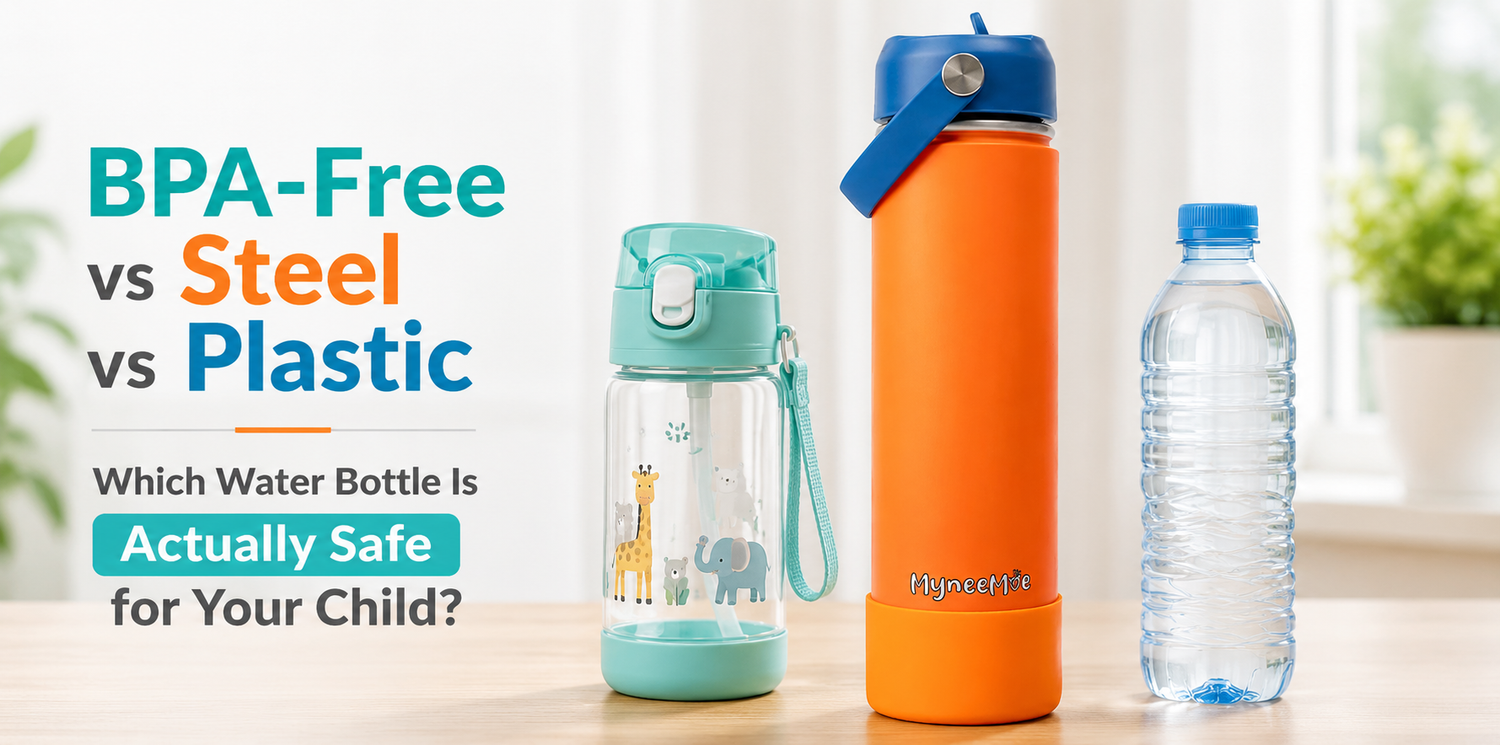
With the help of this review, you will be able to compare BPA-free water bottles, stainless steel, and regular plastic and decide on the product which would suit your kid.
Understanding the Materials: What's Actually in Your Child's Bottle
Before comparing, it helps to understand what each material actually is and what it does inside a bottle.
A. Regular Plastic
Most cheap kids' water bottles are made from plastic, specifically polycarbonate, polypropylene, or PET plastic. The main concern with certain plastics is BPA (Bisphenol A), a chemical used in manufacturing that can leach into liquids, particularly when the bottle is exposed to heat, sunlight, or repeated washing.
BPA has been linked in research to hormonal disruption; it mimics oestrogen in the body. For growing children, consistent low-level exposure over time is what researchers flag as a concern.
The other issue with plastic: it degrades. Scratches, cracks, and cloudiness aren't just cosmetic. There are signs that the material is breaking down, and small particles can end up in the water your child drinks.
B. BPA-Free Plastic
BPA-free water bottles eliminated that exact chemical compound from the plastic composition. It is truly a move towards progress.
But what many don't know, and it is crucially important to understand, is that being "BPA free" does not imply that there are no other chemical compounds present. In fact, many producers substituted BPA with either BPS or BPF (both compounds belonging to the same chemical family).
That said, a certified BPA-free water bottle from a reputable brand is meaningfully safer than a regular plastic bottle, especially if it's also labelled food-grade and isn't used for hot liquids.
C. Stainless Steel
A stainless steel water bottle is composed of food-grade metal, usually referred to as 18/8 (304 grade) stainless steel, which contains 18% chromium and 8% nickel. These metals have great resistance to corrosion; they do not react with acidic drinks, nor do they release any chemical substance into the water.
A stainless steel water bottle is composed of food-grade metal, usually referred to as 18/8 (304 grade) stainless steel, which contains 18% chromium and 8% nickel. These metals have great resistance to corrosion; they do not react with acidic drinks, nor do they release any chemical substance into the water.
Is a stainless steel water bottle safe? For most children and most uses, yes, it's considered one of the safest materials available for drinkware. It doesn't degrade with washing, doesn't absorb odours, and isn't affected by sunlight or heat the way plastic is.
The one caveat: avoid cheap, unbranded steel bottles that don't specify the steel grade. Low-grade steel can corrode over time, especially with acidic juices.
Steel vs Plastic Water Bottle: A Direct Comparison
Here's how the two main options stack up across what matters most to parents:
|
Factor |
Stainless Steel |
BPA-Free Plastic |
|
Chemical safety |
High, no known leaching |
Moderate, BPA removed, other compounds possible |
|
Durability |
Excellent, lasts for years |
Good, degrades faster with use |
|
Temperature safety |
Safe for hot and cold |
Cold only, heat increases leaching risk |
|
Odour/stain resistance |
Excellent |
Moderate, absorbs smells over time |
|
Weight |
Slightly heavier |
Lighter |
|
Cost |
Higher upfront |
Lower upfront |
|
Long-term value |
Better |
Needs more frequent replacement |
For a steel vs plastic water bottle decision in daily school use, stainless steel wins on safety and durability. Plastic wins only on weight and initial cost.
The Heat Problem: Why This Matters in India
This is an aspect which many guides tend to omit, and one that is very pertinent to Indians.
Plastic bottles placed in children’s school bags that are exposed to the heat of the day, either in the car or near heated tiffin lunch boxes, are exposed to high temperatures on a regular basis. High temperatures increase the rate of chemical leaching from plastic, even those that do not contain BPA. A safe water bottle for kids in India should withstand our climatic conditions; hence, plastic bottles face more risks here than in other parts of the world.
Steel is not affected by temperatures, regardless of whether they are low or high.
Choosing a Safe Water Bottle for Kids India: What to Look For
Whether you go with stainless steel or BPA-free plastic, make sure your reusable bottle has the following characteristics:
-
Made from food-grade materials, which are clearly labeled (18/8 steel or BPA-free and phthalate-free plastic)
-
No detectable chemical odor when new
-
Wide opening for easy cleaning
-
Certified BPA-free lid and straw (when included)
-
Suitable for your baby’s age and weight
A feature parents overlook: The lid and straw can be made of another type of plastic than the rest of the bottle body. Make sure to check this out.
Conclusion
Material is what matters most when choosing a water bottle for your baby. BPA-free water bottles are indeed better than conventional plastic ones. However, there is no substitute for stainless steel water bottles, which are safe and durable. This is especially true considering India's weather.
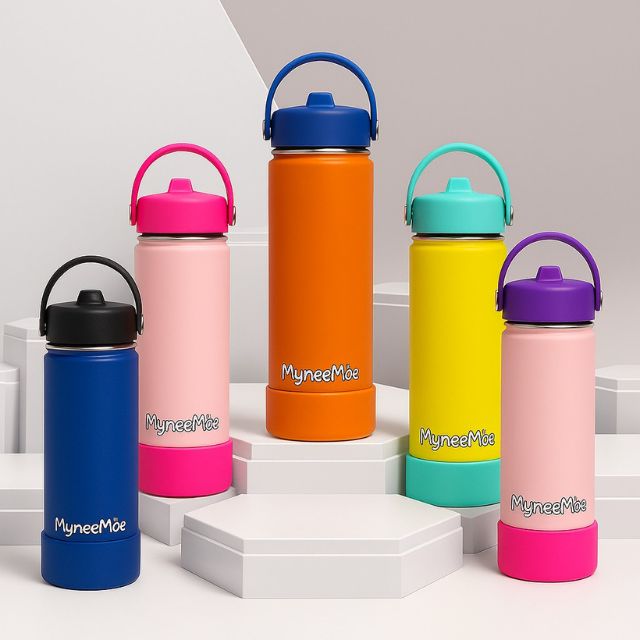
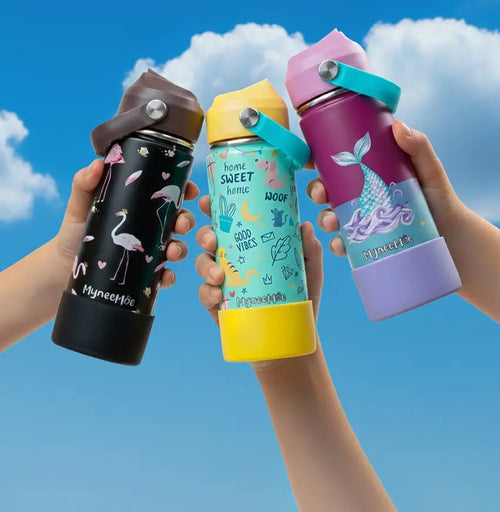
Some companies, such as MyneeMoe, manufacture stainless steel water bottles meant exclusively for Indian children. These are safe and durable, and perfect for use in schools.
FAQs
Q1: Is BPA-free plastic actually safe for kids?
While BPA-free plastic is relatively safe compared to regular plastic since it eliminates one major hormone disruptor, some BPA-free plastics employ other chemicals (BPS, BPF) that have not yet been proven to be absolutely safe. The safest choice would be food-grade stainless steel, of course.
Q2: Are stainless steel water bottles safe for children?
Yes, food-grade stainless steel (18/8 or 304 grade) is considered one of the safest materials for kids' drinkware. It doesn't leach chemicals, doesn't degrade with washing, and is safe for both cold and warm liquids. Always check that the steel grade is clearly labelled.
Q3: Can I put warm liquids in a BPA-free plastic bottle?
It's best not to. Heat increases the rate at which chemicals can migrate from plastic into liquid, even from BPA-free bottles. For warm drinks like milk or soup, use a stainless steel insulated bottle or thermos instead.
Q4: Won't a steel water bottle be too heavy for a young child?
A compact 350–500ml stainless steel bottle is only marginally heavier than a plastic equivalent of the same size. For children under 5, choose smaller formats. The weight difference becomes negligible from primary school age onwards and is worth the safety trade-off.
Q5: How do I know if my child's current plastic bottle is safe?
Look at the bottom of the bottle for its recycling code. Plastics numbered 2, 4, and 5 are usually safer types of plastics. On the other hand, plastic number 3, 6, and 7 are riskier. Moreover, ensure to buy bottles labeled BPA-free and free from any chemical odor, visible scratches, or cloudiness.