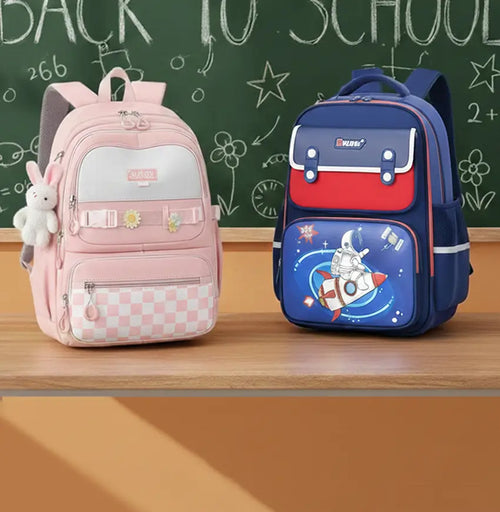


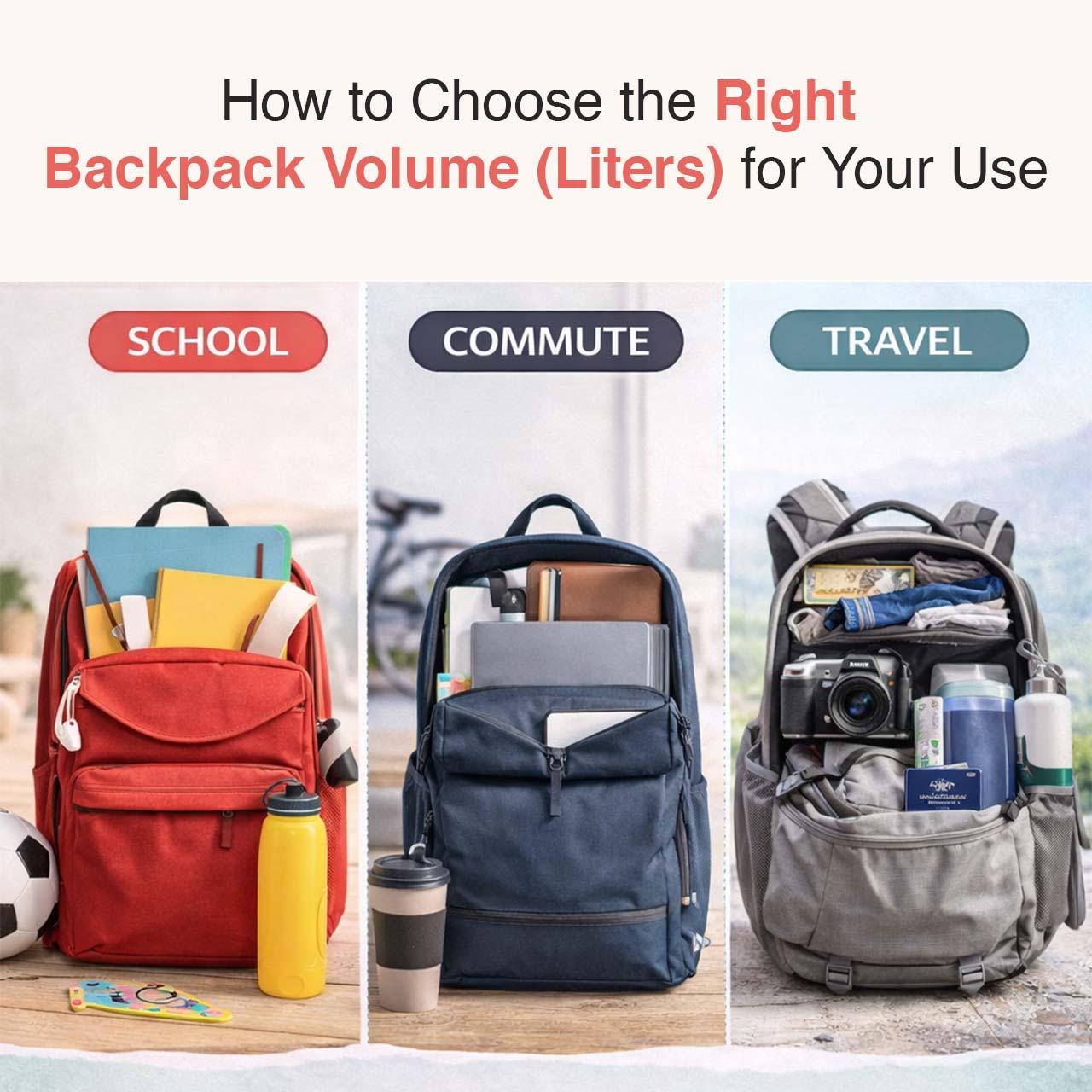
You might think it’s no big deal. Grab a backpack, throw your stuff inside, and you’re good to go. But if the backpack is too small, you’ll spend every morning playing Tetris. And if the backpack is too big, you’ll spend all day carrying around space on your back.
The truth is, backpack capacity is more important than you might realise. It’s actually pretty simple: if you get the right backpack, it’ll be your best friend. But if you don’t, it’ll literally be a pain. Let’s break it all down.
Why Backpack Volume Even Matters
It is measured in litres. It's like how much "space" you have inside your bag. A 10L bag is like having a lunchbox with straps. A 70L bag is like having a moving box on your back.
The right size for you depends on three things:
-
What you carry: books, laptops, gym, or any camping gear?
-
How long will you be out: hours or weeks?
-
How you carry: overpacker or minimalist?
Finding this balance changes everything.
Backpack Volume Ranges: A Quick Breakdown
Under 20 Litres
These are your day packs. These are lightweight, compact, and an ideal pick for short trips and light loads. Think about city walks, school runs, or errands.
Best for:
-
Kids or students who need to carry fewer items
-
Day hikes on familiar trails
-
Commuters who travel light
These packs won’t work if you carry a laptop, water bottle, and extra clothes all at the same time. The room runs out very quickly.
20–35 Litres
This is the sweet spot where most people will fall. A 25-30L pack has plenty of space for a laptop, charger, lunch, water, and a jacket. It's spacious without being cumbersome.
Best for:
-
Daily college or office commute
-
Carrying multiple books to school on full days
-
Weekend excursions, light hikes
If you're unsure of what size to begin with, we recommend starting here. It's a good all-around option.
35–50 Litres
Now we're getting into high capacity backpacks. These are designed for people who carry a lot or carry for a long time.
Best for:
-
Full day or long overnight hikes
-
Travel with a carry-on style bag
-
For the ones who carry work gear, snacks, or gymwear in one
The extra room is wonderful, but it also means extra weight if you're not careful. These backpacks work best for people who are good at packing.
50 Litres and Above
This is the realm of the true large capacity backpack. We're talking multi-day backpacking trips, camping excursions, and travelling far beyond the weekend escape.
Best For:
-
Backpacking 3-7+ days
-
Outdoor expeditions with sleeping bags and tents
-
Long-haul travellers carrying zero checked baggage
One thing to note: size is not always comfort. A 65L backpack, even if packed incorrectly, can be a recipe for a sore back in short order. Be sure to check for padded straps, a hip belt, and a back panel with some sort of ventilation when going this large.
How to Match Volume to Your Use Case
Here's an easy way to understand it:
|
Use Case |
Recommended Volume |
|
Quick errands/kids |
Under 20L |
|
Daily commute/school |
20–30L |
|
Full workday + gym |
30–40L |
|
Day hikes/travel |
35–50L |
|
Camping / long trips |
50L+ |
Still unsure? Pack all the things you normally carry onto your bed, measure them, then add a small buffer to that measurement. That’s your ideal size.
Conclusion
It's not rocket science to choose the backpack's volume, though it does require a moment of contemplation. Be aware of your load, and choose a backpack based on it. A proper backpack will only enhance your outings.
And hey, if you're also thinking about how you carry your lunch, you should totally check out MyneeMoe. They have an awesome range of backpacks that will meet your requirements.
FAQs
Q1. Is a high capacity backpack really worth it for daily commuting?
Not really for most people. A high-capacity backpack is meant for travelling or trekking and is not suitable for daily use. It might even feel bulky and unnecessary for daily commuting. You may carry unnecessary weight. A 20L to 30L backpack is more suitable. It is comfortable and does not restrict movement.
Q2. Does backpack capacity affect comfort and posture?
Yes, a lot. The backpack capacity is important as it helps distribute the weight evenly across your shoulders and back. A backpack that is too large might shift the weight and cause discomfort. A backpack that is too small might cause discomfort if it is overpacked. A backpack can help you maintain good posture and minimise strain on your spine.
Q3. Can't I just use a large capacity backpack for everything like travel, hiking, and daily use?
You can, but it is not the best choice. A large capacity backpack is a great choice when you are travelling or need one for a short trip, but it may be considered too big for daily use. It may be considered bulkier and heavier, and the organisation may be a problem. It is always best to choose a backpack that suits your needs.
Q4. Is there a standard backpack capacity that works for most people?
Yes, 20L-30L is considered the best size range for everyday use. This is the most suitable size range for a backpack intended for students, office workers, and commuters.
Q5. Isn't a large capacity backpack too heavy even before you pack anything into it?
Not necessarily, as a high-quality large-capacity backpack is made of lightweight materials. Therefore, it should not be heavy when it is empty. However, it may be heavy when it is full and not packed smartly.