





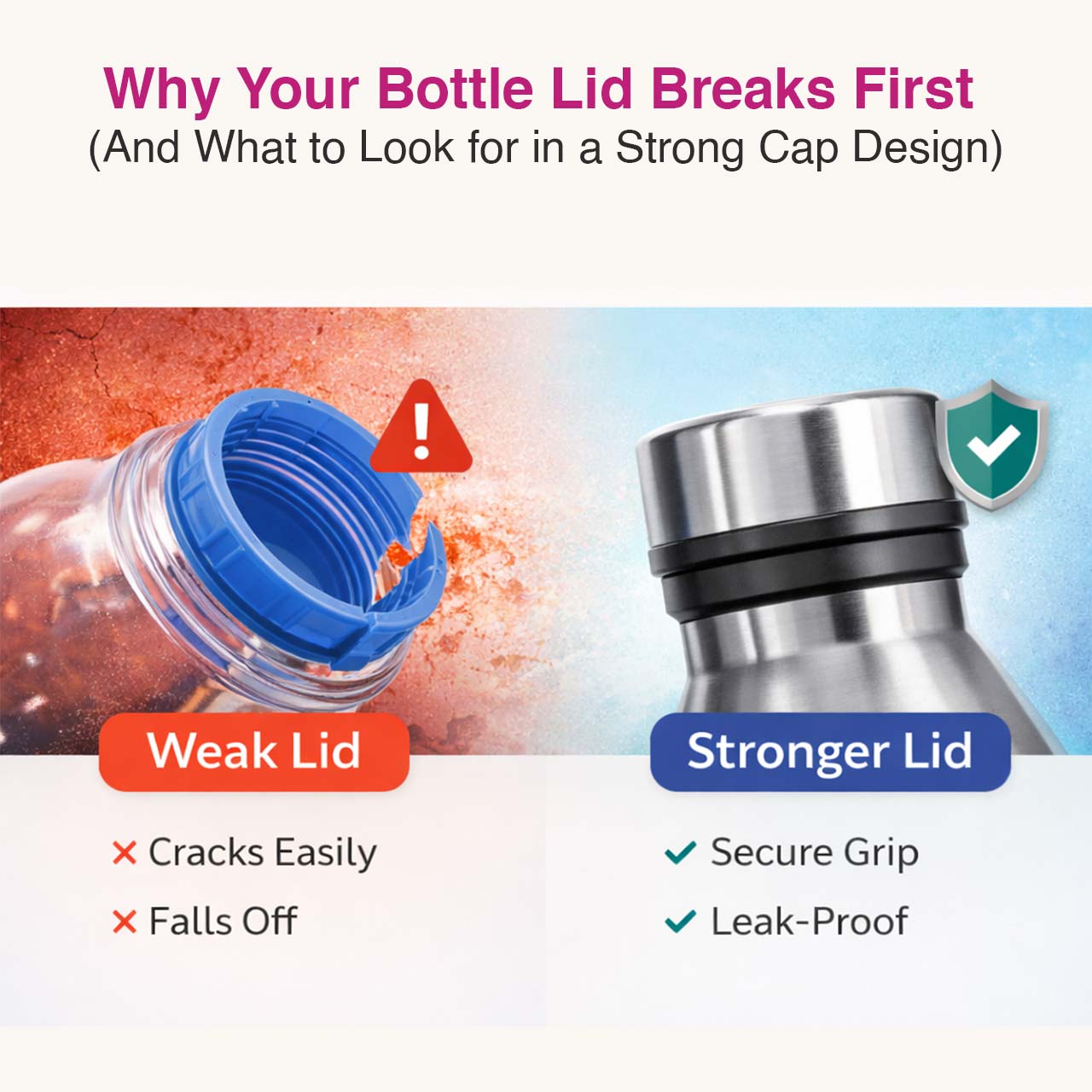
You purchase a robust bottle. Thick body. Feels sturdy. Looks unbreakable. However, somehow, it’s the cap that fails first. Does this sound familiar to you? You’re not alone. Let’s dissect why this occurs and what your bottle isn’t telling you.
When you purchase a water bottle, you want the body to take the punishment. After all, it’s thicker and feels more robust. However, in most instances, the actual point of failure is the water bottle caps. The breakage typically occurs around the hinge, thread, or locking mechanism. One day, it’s working perfectly. The next day, it’s leaking. Isn’t that frustrating?
The reality is straightforward. The lid takes more abuse than the body. It twists, breaks, locks, falls, and closes every day of the week. Eventually, it all catches up.
Let’s examine why this occurs.
The Cap Handles More Stress Than You Think
The body of your bottle is just sitting there. The cap is doing all the work.
Each time you:
-
Turn it to open it
-
Screw it on too tight
-
Close it too hard
-
Put it in your bag
-
Throw it on the floor
You are stressing the lid of a bottle.
Repeated Twisting Weakens Threads
The threads on bottle lid closures are thin and intricate. They have to seal well. This requires precision.
However, continuous turning results in:
-
Micro-fractures
-
Thread wear
-
Inconsistent pressure points
Over-tightening is a common error. It is more secure. But it gradually damages the lid.
Hinges and Clips Are the First to Suffer
If you have a flip top water bottle, this section is for you. Flip tops are great. One click and you’re drinking. But with great convenience comes a great price.
The hinge on a flip top water bottle:
-
Is thin
-
Is used multiple times a day
-
Takes the brunt of the fall when dropped
The hinge will become brittle with age. One little fall, and it’s over. Game over.
Even locking clips have the same problems. The more pieces that have to move, the greater the likelihood of failure.
Material Matters More Than You Realize
Not all plastics are created equal. Some plastics are designed to last. Others are designed to look tough.
Poor-quality water bottle caps are made of:
-
Low-quality plastic
-
Thin mold designs
-
Poor seals
The body of the water bottle can be made of stainless steel. It can withstand shock. However, the cap is made of plastic. This is already a problem in terms of durability.
Seals and Gaskets Wear Out Quietly
Underneath most bottle lids, there is a small silicone ring. This ring prevents leaks in your bottle. However, these seals:
-
Dry out
-
Stretch
-
Lose elasticity
When this occurs, you tighten the lid further. This exerts more pressure on the threads. And the cycle repeats itself.
It is like trying to tighten a loose screw on a weak spot. Eventually, the spot fails.
Drop Impact Hits the Lid First
Tell the truth. When your bottle drops, which part lands first? It’s always the top.
Because of gravity and height, the cap takes the shock. Even if the body is intact, the shock waves go through the lid system. That’s why cracks appear:
-
Near the hinge
-
Around the locking button
-
Along the thread line
The bottle body is sturdier. The cap has intricate systems. Who gets hurt?
Daily Habits That Secretly Damage Bottle Caps
Other times, it’s not about quality. It’s a habit.
Here’s what might be reducing the lifespan of your water bottle caps:
-
Overtightening after every refill
-
Using hot liquids in plastic lids
-
Loosely placing bottles in bags
-
Closing flip-top lids
-
Washing in high-heat dishwashers
Small habits. Big impact.
Know How to Choose a Stronger Bottle Cap
Now that you understand why caps are problematic, here’s what to look for in a good one:
-
Thick hinge design
-
Broad thread lines
-
BPA-free, high-density plastic
-
Replaceable silicone seals
-
Few moving parts
If you like a flip top water bottle, check these things:
-
Is the hinge thick and flexible?
-
Does the lock mechanism feel strong?
-
Is the plastic slightly flexible rather than hard and brittle?
Flexibility is often a sign of greater durability.
Why the Bottle Body Survives
The body of the bottle is constructed like armor.
-
Thicker material
-
Fewer moving parts
-
Even weight distribution
It doesn’t twist daily. It doesn’t snap open or close. It just holds water. Elsewhere, the lid of a bottle pulls double duty. So given that, it should come as no surprise if the cap cracks first.
Conclusion
When your lid cracks before the body of the bottle, it’s not bad luck. It’s design physics. The lid is subjected to more stress, more motion, and more impact daily. That’s why it’s just as important to pick a good bottle lid as it is to pick a good bottle.
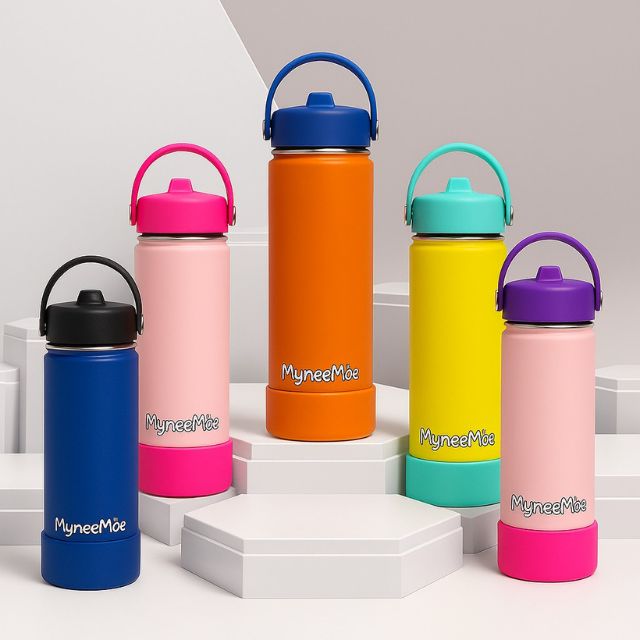
If you’re in the market for well-designed bottles with tough lids that are designed for everyday use, MyneeMoe is here to solve that exact problem. With a fantastic selection of dependable water bottles, you’ll get the durability where it really matters, on top.
FAQs
1. Why do water bottle caps crack before the bottle body?
Water bottle caps crack first because they are subjected to more stress. They are turned, twisted, tightened, and dropped every day. The body of the bottle remains stationary, and the cap moves.
2. Is it normal for bottle lids to break within a few months?
No, it is not ideal. However, cheaper bottle lids made of thin plastic or hinges may crack sooner, especially if they are used frequently or handled roughly.
3. Why does the lid of a bottle start leaking even if the bottle looks fine?
The lid of a bottle has threads and silicone seals. With time, they wear out or become loose. Even if the body of the bottle is in good condition, the threads and seals may leak.
4. Do flip top water bottle caps break more easily?
Yes, in most instances. A flip top water bottle has hinges and locking systems. These parts are subject to constant stress, which makes them crack sooner than simple screw caps.
5. Can overtightening damage water bottle caps?
Yes. Over-tightening exerts additional stress on the threads of water bottle caps. With time, this may lead to cracking, thread irregularities, or sealing problems.