



School Lunch Boxes
Filter
Sort by
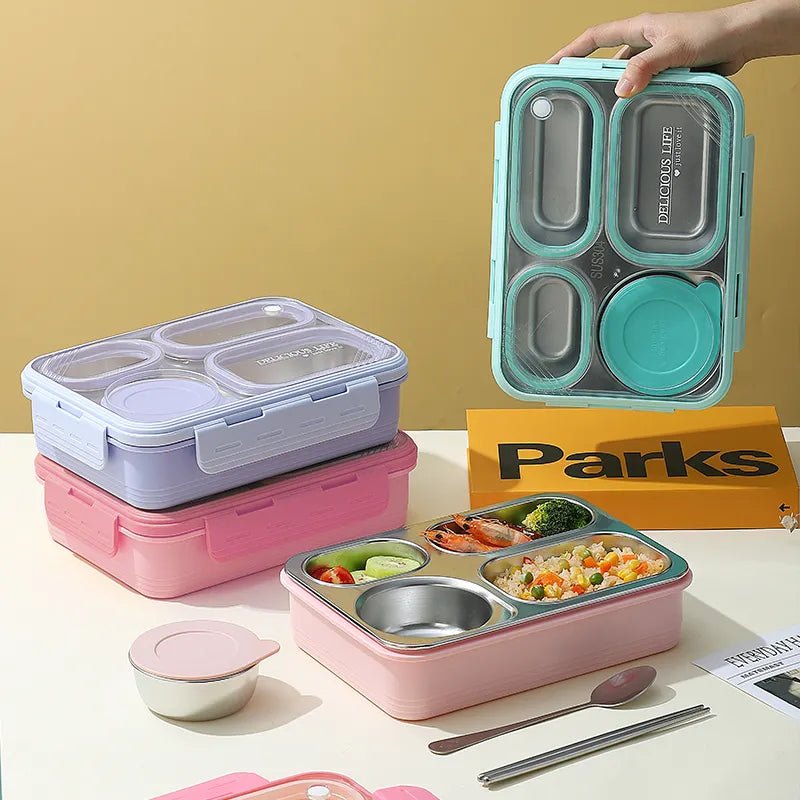
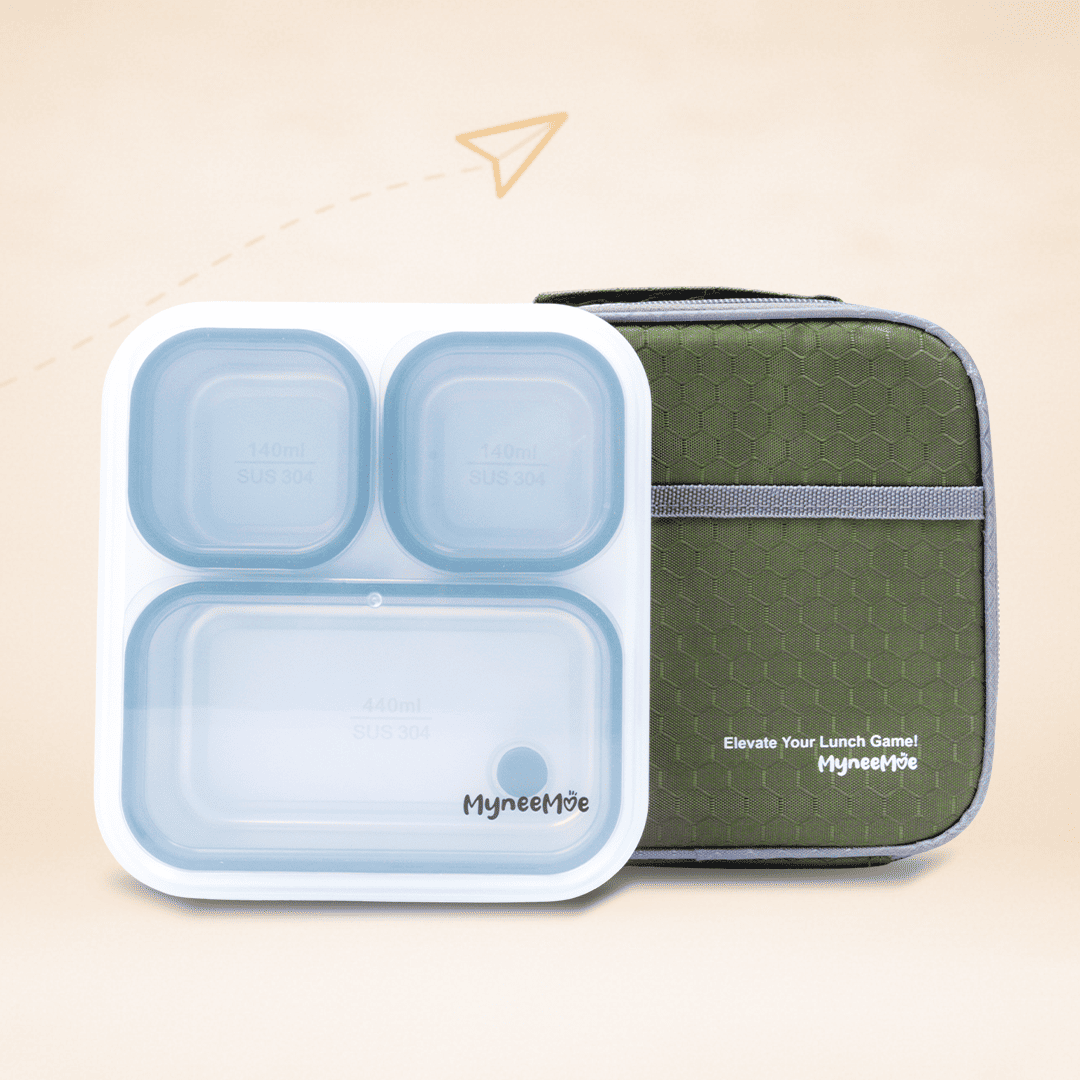
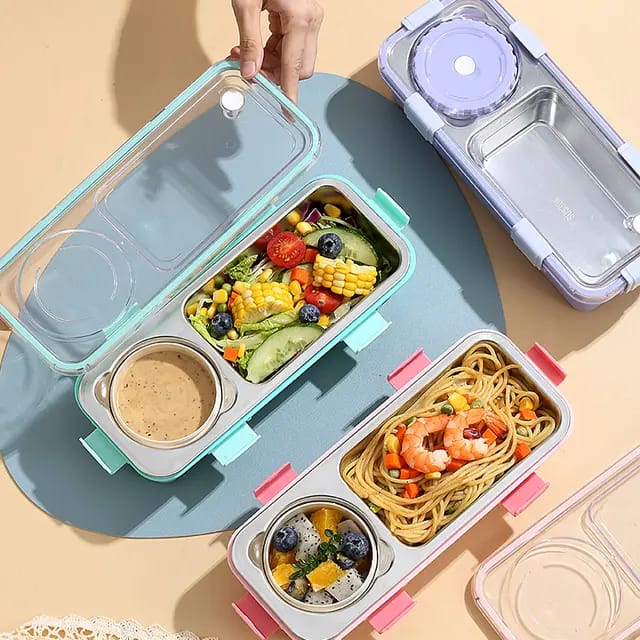
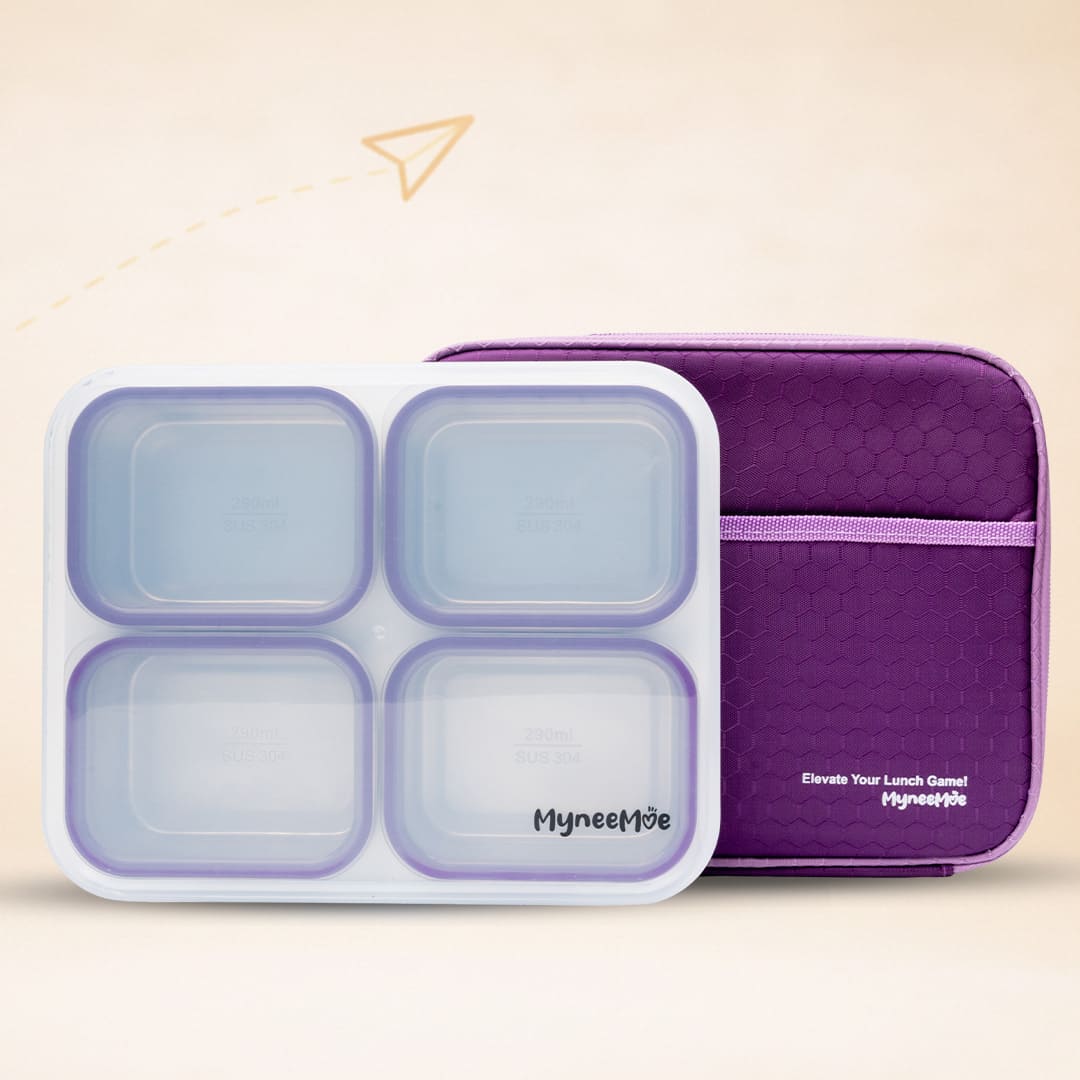
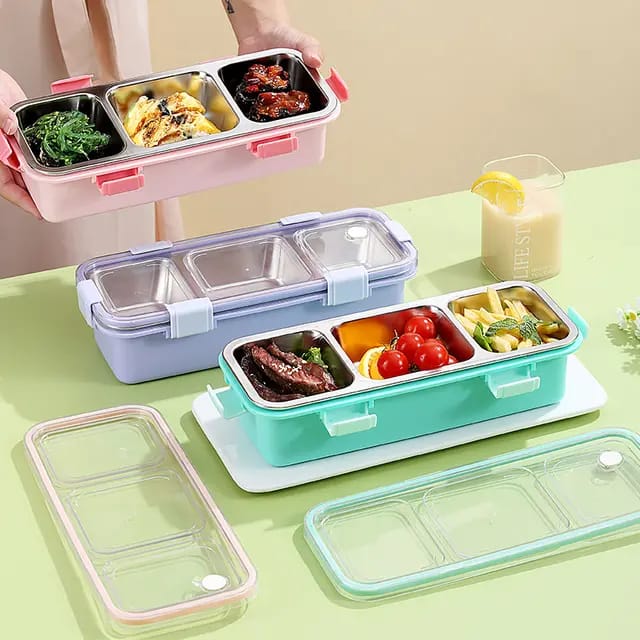
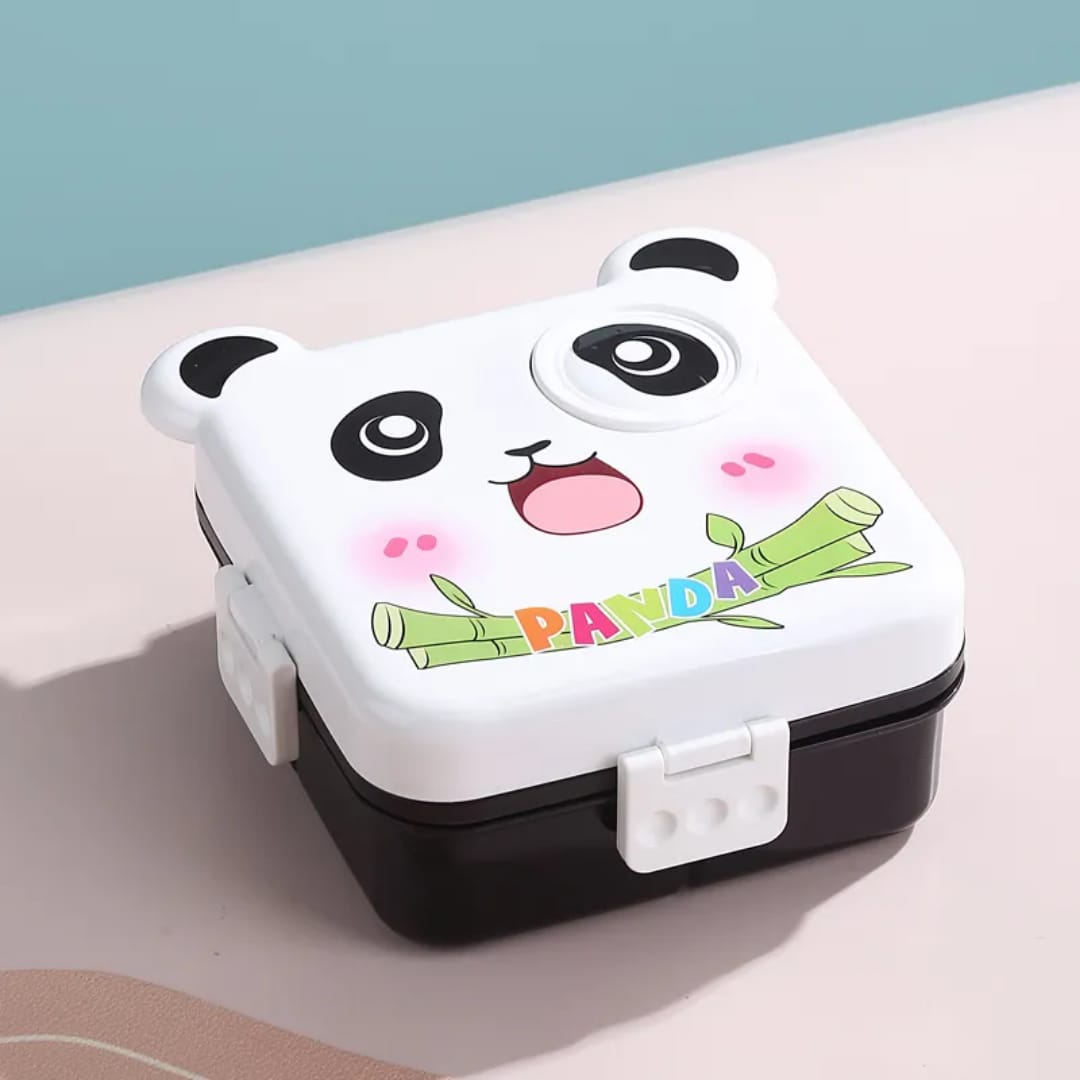
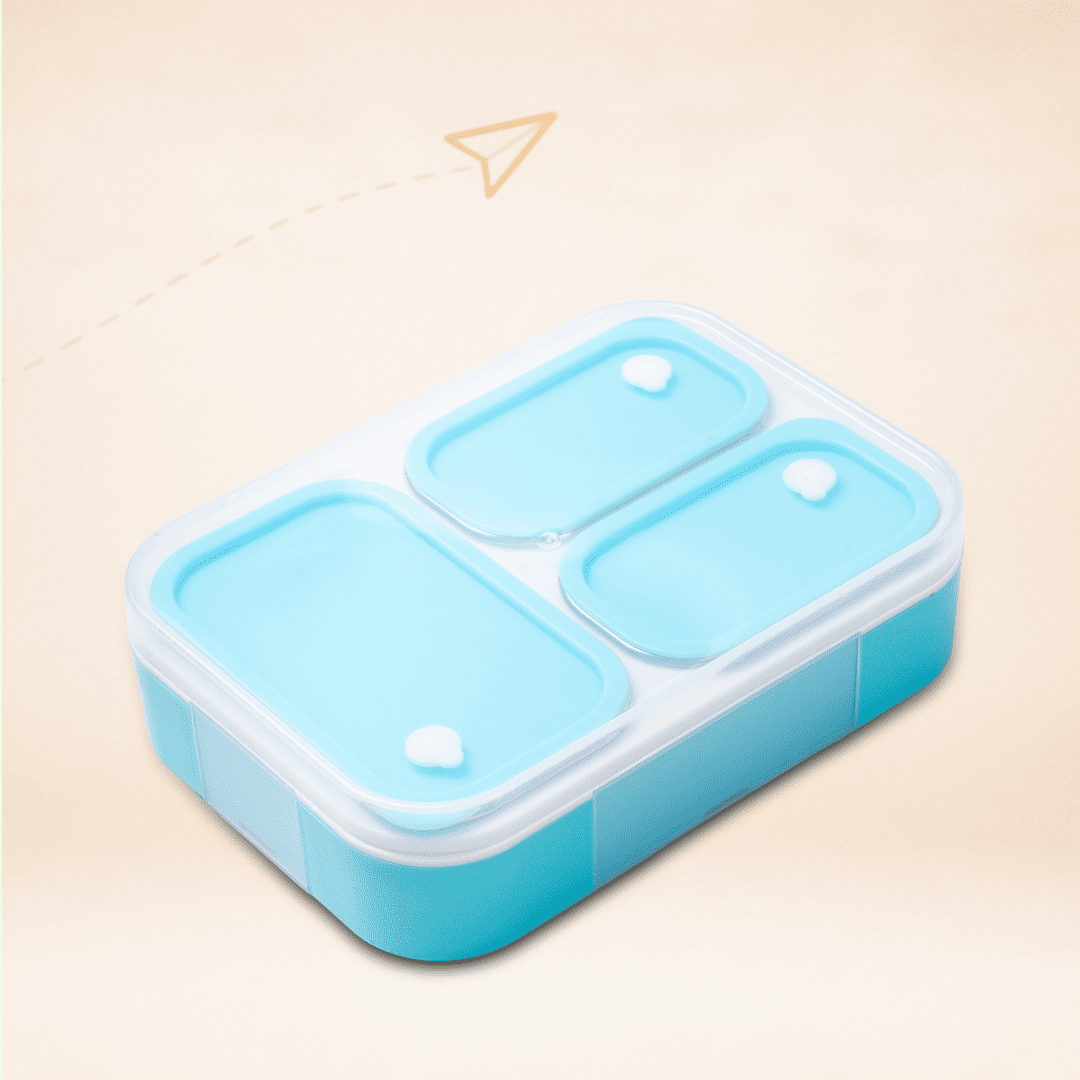
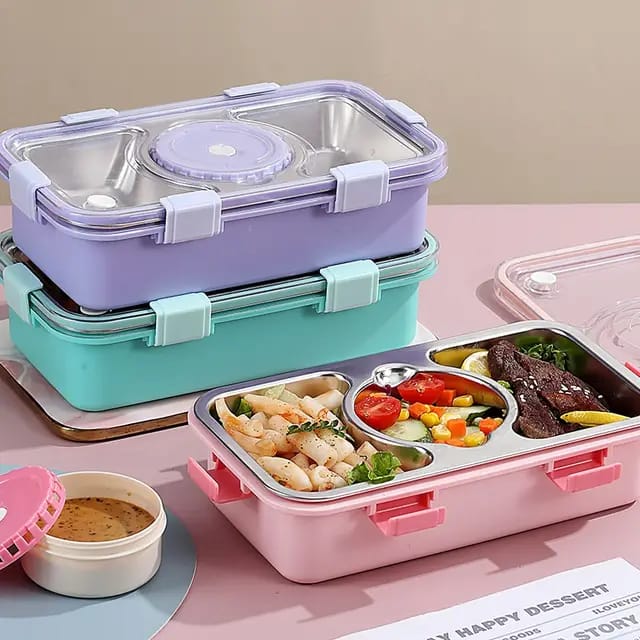
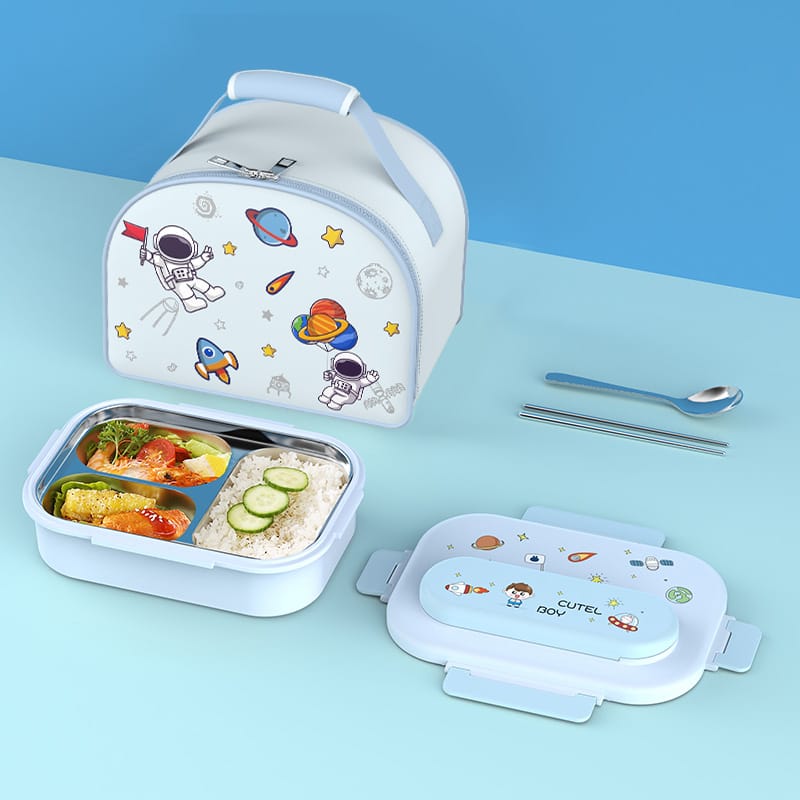
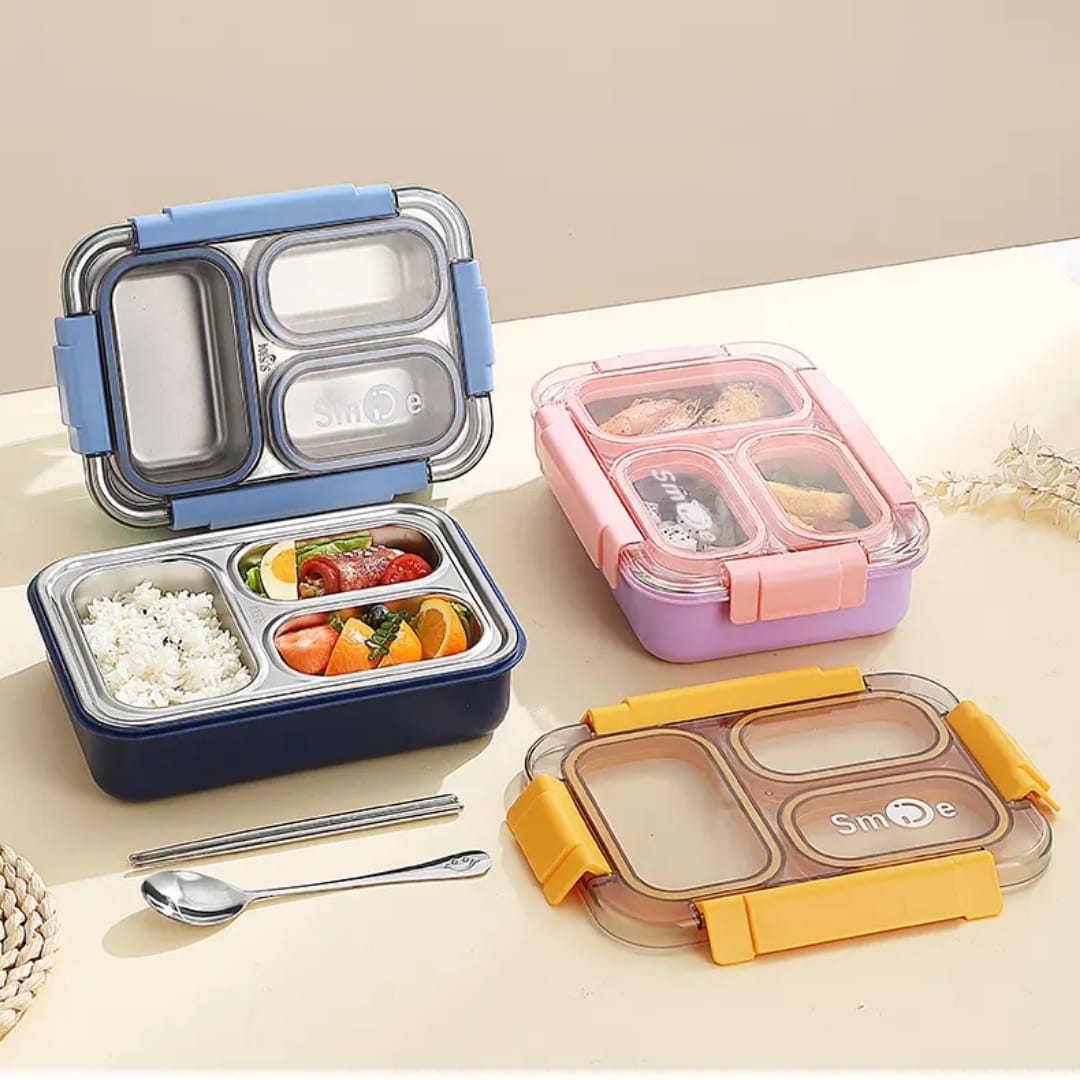
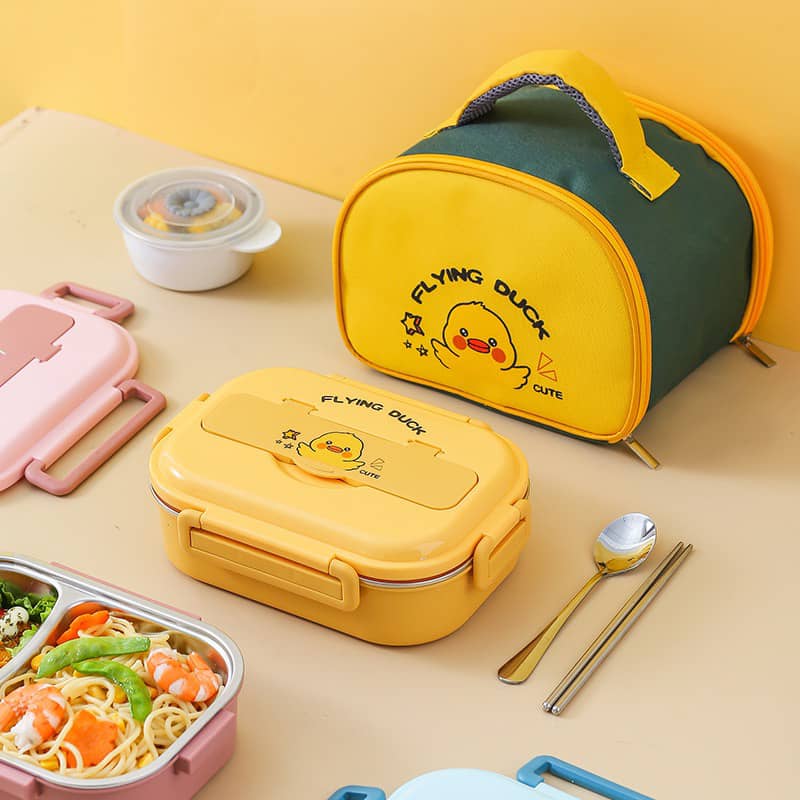
Explore Stainless Steel School Lunch Box Built for the Indian School Bag Online
Every Indian school bag has one thing in common: a lunch box stuffed somewhere in the middle, getting squashed by textbooks and water bottles from all sides. That lunch box needs to survive the commute, open easily in a ten-minute lunch break, and come home without leaking. MyneeMoe's school lunch box collection is built specifically for this reality. Food-grade stainless steel, child-friendly clip locks, and portion sizes matched to actual school-age appetites.
If you've been searching for the best kids lunch boxes for school that genuinely hold up to daily use, you're in the right place.
Buy School Lunch Box in Stainless Steel: Safe, Durable Tiffin for Every School Day
A steel lunch box for school is something your child handles twice a day, five days a week, for months at a stretch. It gets dropped. It gets shoved. It gets left in a hot bag on a sunny day. The standard it needs to meet is higher than most parents realise at first, until they've replaced two or three plastic tiffins in a single year.
A. Food-Grade Stainless Steel, Leakproof and BPA-Free
The steel in our school lunch boxes is 304-grade food-safe stainless steel. That's the same grade used in commercial kitchens and hospital equipment. It doesn't react with acidic foods like tomato sabzi or tamarind dal. It doesn't stain. It doesn't hold odour.
-
100% BPA-free, inside and out
-
Silicone gasket lid creates a leakproof seal for curries and curd
-
Safe for hot and cold food alike
No chemicals. No smell. Just clean, safe food every school day.
B. Lightweight, Easy-Open, and Right-Sized for Children
A lunch box that's too heavy adds unnecessary weight to an already loaded school bag. Our steel tiffins are designed with a wall thickness that's strong but not bulky, light enough for a 6-year-old to manage independently.
-
Weighs under 300g for smaller capacity variants
-
Smooth, rounded edges
-
Wide-mouth opening makes packing and eating easier for small hands
Your child shouldn't need help opening their tiffin at school. Ours are designed so they don't.
C. Clip-Lock Lid That Holds Securely in a Packed School Bag
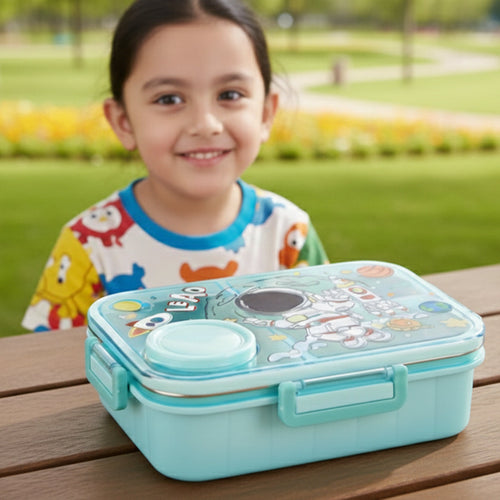
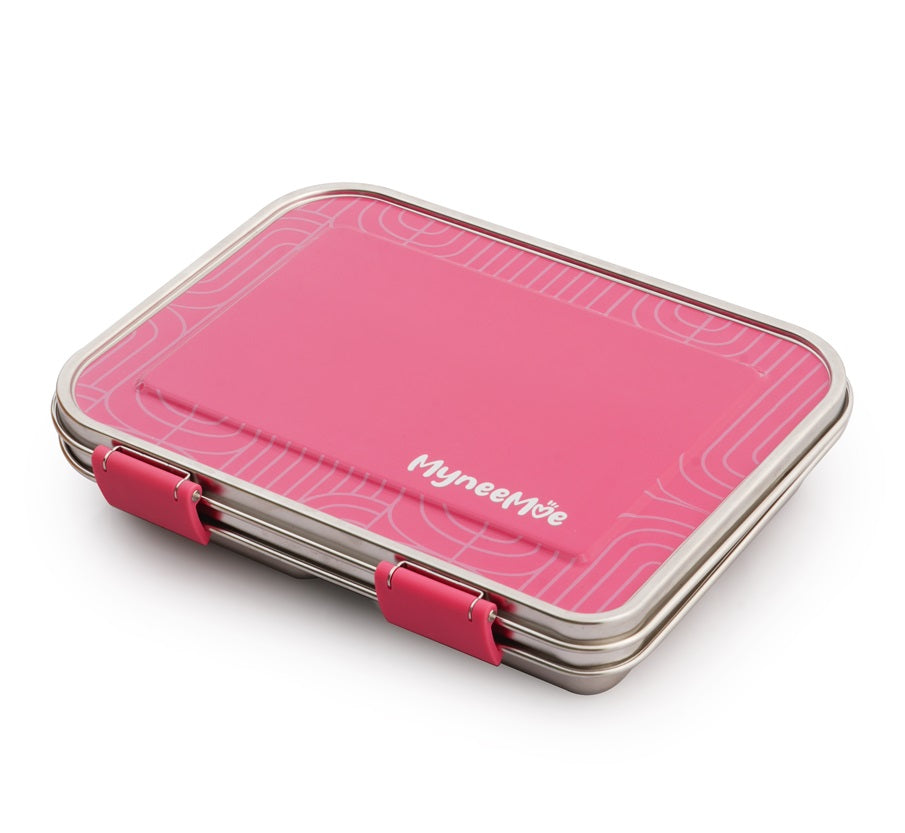
The clip lock on our school steel lunch box is a functional locking mechanism that keeps the lid firmly shut even when the box is compressed between books and a water bottle. One click to close. One lift to open. That's it.
-
Side clips lock flush to the body, so there is nothing to catch on the bag’s material
-
The child can open independently without any assistance from adults
-
Reliable locking after prolonged daily usage
What Every School Lunch Box Must Get Right
There are a lot of lunch boxes on the market. Many look great in photos. Fewer actually work well in a school bag. Here's what separates a genuinely good tiffin from one that looks good until the first week of term is over.
A. Portion Size Must Match the Child's Age
A 550 ml lunch box is not suitable for a 5-year-old. A 400 ml box does not provide enough food for a 13-year-old to go through a whole day in school. It is not only the size that matters, but also the amount of food that fits well into the lunch box and enables the child to eat the entire meal.
Parents tend to select a size that seems "right." In such a case, the outcome will either be a half-empty lunch box where the food will move freely or a packed lunch box that cannot be sealed well.
B. Lid Must Be Child-Friendly: Opens Without Twisting or Prying, Closes With a Click
This is much more important than what most parents realize. If the child cannot open their lunch box by themselves, then they will go without eating or ask for the help of a teacher, which is not optimal. Clip-on lids fix this problem entirely.
The click-close mechanism also gives kids an audible confirmation that the lid is actually shut. That matters when they're packing up quickly after lunch and rushing back to class.
C. Drops, Compression, and Temperature Changes
There are three kinds of physical stress exerted on the school bag lunch box that are not exerted on home lunch boxes:
-
Dropping from tables, lockers, and floors
-
Compressing by books, bags, and other children sitting on objects
-
Thermal stress from air-conditioned classrooms to hot school buses
It does not deform, crack, or lose its seal shape in any of the three scenarios. It is this structural benefit of steel over plastic that people do not consider much.
School Lunch Box Range: Built Specifically for School Use
Children do not necessarily consume the same amount. Schools do not provide the same duration of lunch break. Our size range has taken this into account by providing sizes that cater to age and appetites.
A. 400ml to 550ml Capacity for Ages 5 to 10
Young children will obviously be hungrier for less and have less time for their lunch. Hence, a smaller and lighter box will be more suitable for them when it comes to carrying, eating from, and cleaning it. Our 400ml to 550ml range is just perfect for serving rice with one sabzi, or two rotis with dal.
-
Ideal for ages 5 to 10
-
Easy for small hands to carry and open
-
Fits neatly in the side pocket or main compartment of a primary school bag
B. 600ml to 800ml for Ages 10 to 15 With Larger Portions
Older kids need more food. A 600ml to 800ml steel lunch box for school gives enough capacity for a full meal with a side, without being so large that it takes up half the bag. This size range also works well for students who bring both lunch and a snack in the same box.
-
Suits the appetites from upper primary through secondary school
-
Large enough for rice, dal, sabzi, and a small dessert
-
Still compact enough for standard school backpacks
C. Separate Compartments for Meal and Snack in One Box
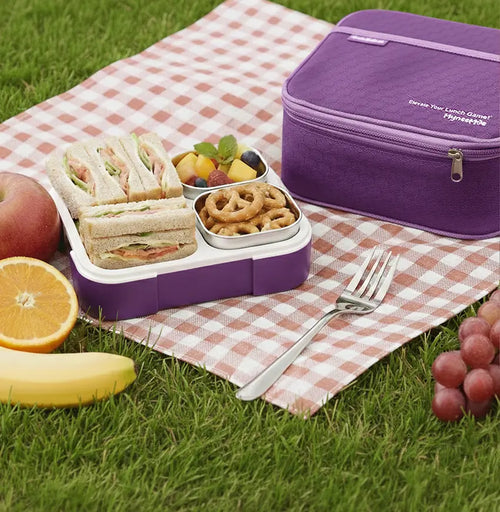
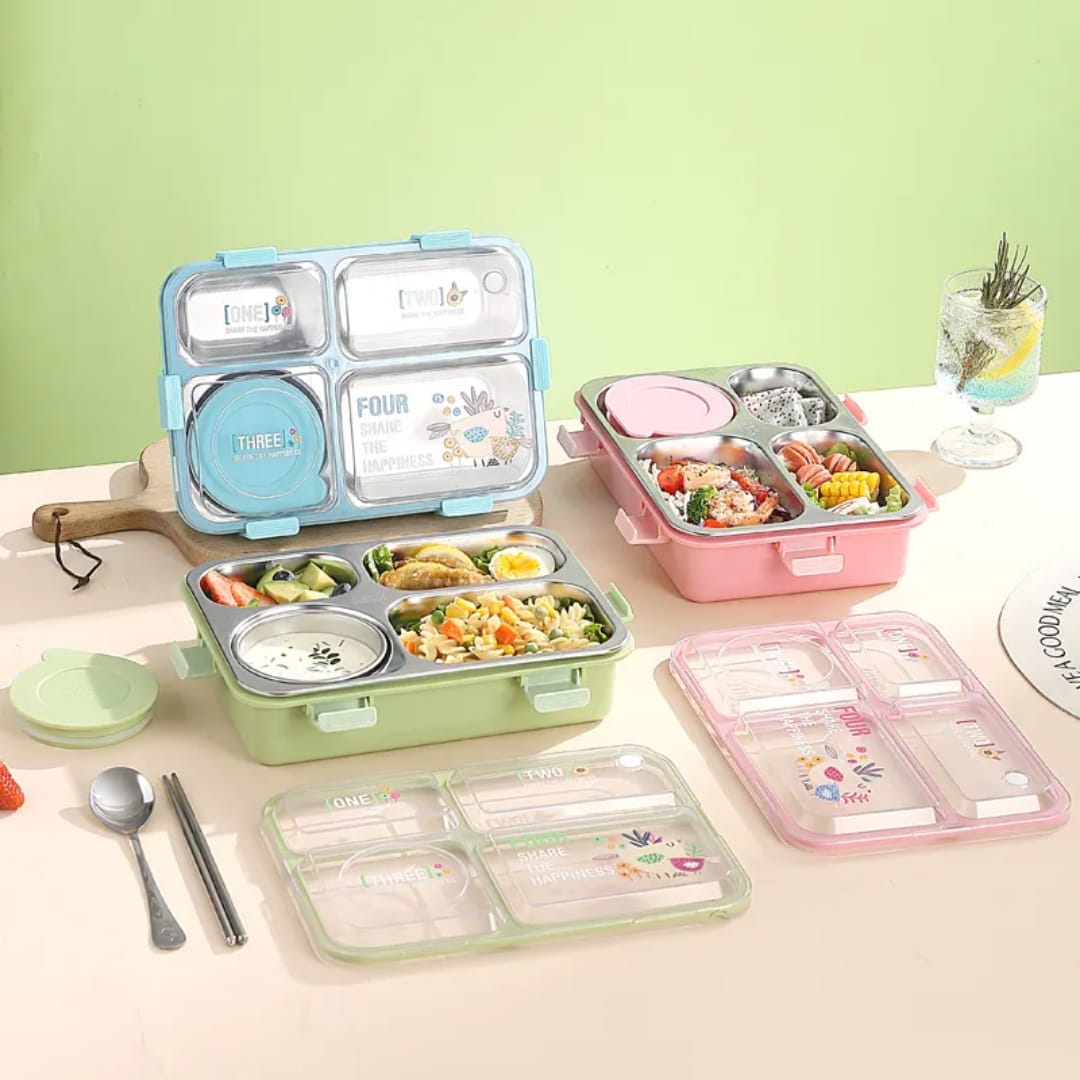
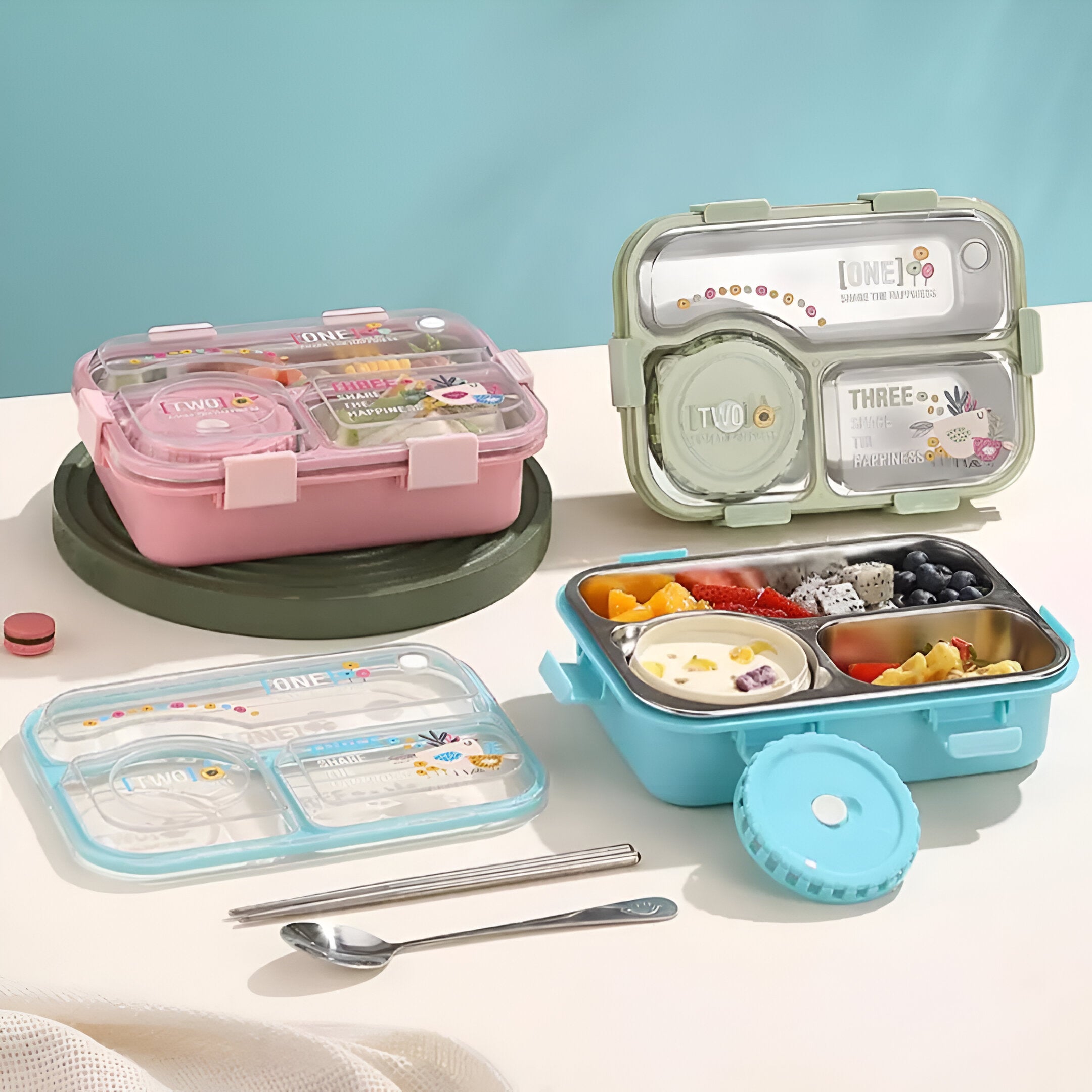
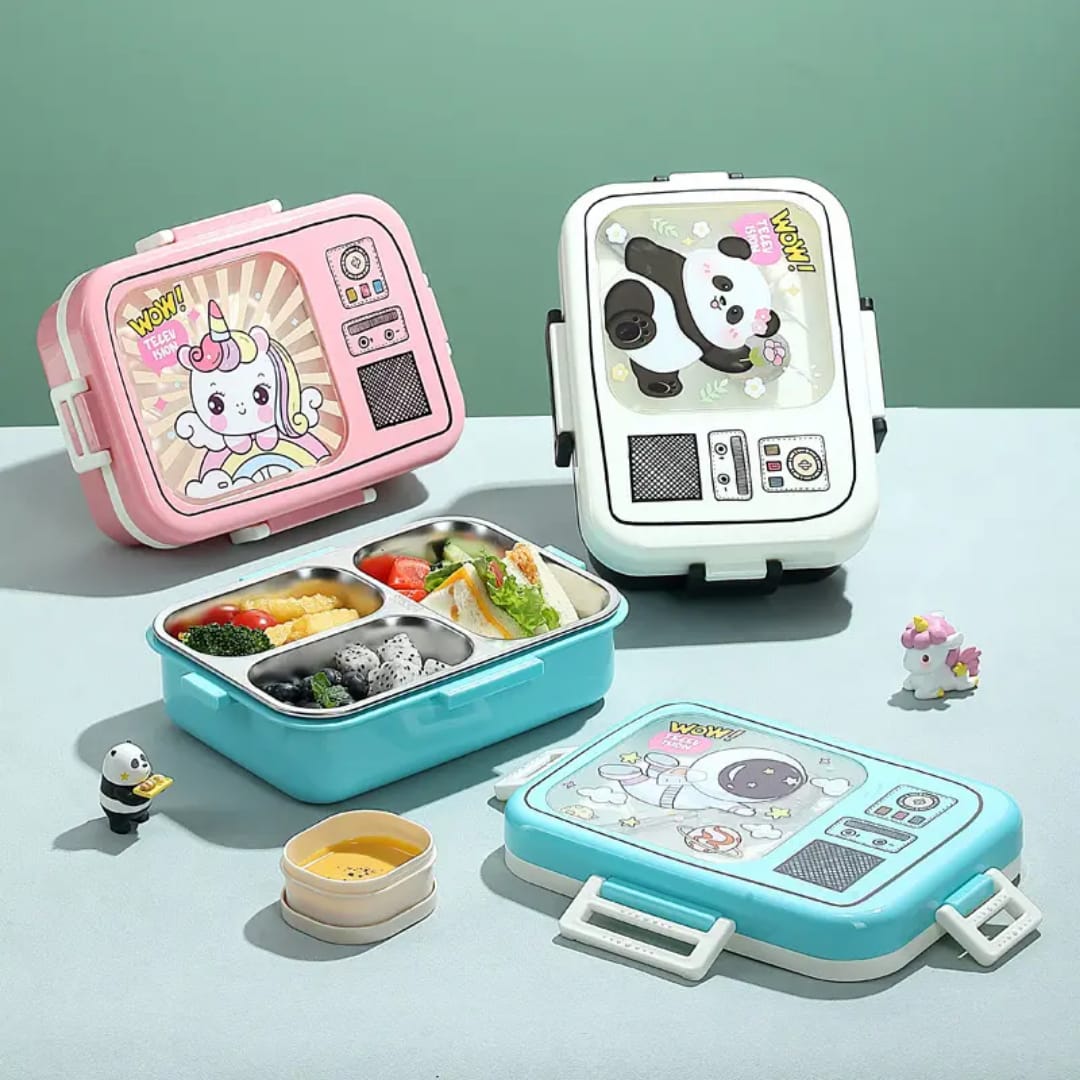
Bento-style compartmented boxes let you pack a full meal and a snack in a single container. That means one less thing in the bag and no mixing of flavours between dishes.
-
Leak barriers between compartments keep food separated
-
Ideal for packing roti with sabzi on one side and fruit or biscuits on the other
-
Same silicone-sealed outer lid across all configurations
Steel School Lunch Box vs Plastic Tiffin: The Difference Every Parent Should Know
This comparison comes up constantly, and it's worth understanding clearly before you buy. Both materials can carry food. Only one of them holds up reliably across a full school year.
A. Plastic Tiffins Crack, Stain, and Degrade
Plastic lunch boxes are usually less expensive to purchase. After a whole year of usage, they tend to develop cracks on the hinges, stains due to turmeric food products, and deformation around the lid, which stops them from forming an airtight seal. A lunch box that is inexpensive will need replacement two to three times within one year.
B. BPA in Plastic Containers Leaches Into Food When Left in Warm School Bags
A lunch box packed at 7 am and eaten at 1 pm has been sitting in a warm school bag for six hours. On a summer day, the temperature inside a school bag can rise significantly. BPA and other plasticiser chemicals in some plastic containers are known to migrate into food more readily under heat.
Food-grade stainless steel has zero leaching risk. It's inert. What goes in comes out exactly as packed.
C. Steel School Lunch Boxes Are Odour-Free
Steel is non-porous. Plastic is not. After repeated use, plastic absorbs food odours at a microscopic level. Your child's lunch box starts smelling like every meal it's ever carried. Steel releases odours completely with a basic warm wash and dries clean.
The best kids lunch boxes for school smell like nothing when they're empty. That's exactly what you get with stainless steel.
FAQs
Q1: Which school lunch box size is best for a 6-year-old?
For children aged 5 to 7, a 400ml to 450ml stainless steel lunch box is the right fit. It's light enough for small hands, holds a typical primary school meal comfortably, and won't add unnecessary weight to a school bag.
Q2: Are steel lunch boxes not too heavy for young children?
Steel lunch boxes used for packing meals today have thin walls to maintain their lightness. The lighter models of MyneeMoe lunch boxes weigh less than 300 grams when empty and are almost similar in weight to mid-range plastic tiffins.
Q3: Which is better for carrying dal and curry: a steel or plastic school lunch box?
The school steel lunch box with a lid having a silicone gasket is a good option to go for Indian foods that involve a lot of liquids. The compression nature of the silicone helps to retain dal and curries without leakage even when the container is slanted or subjected to pressure inside the bag.
Q4: Can a stainless steel lunch box go in the microwave?
Stainless Steel Is Not Microwave Safe.
For heating, you should transfer your food into a microwave-safe container. In the majority of cases, school lunches are delivered hot, but it is consumed either cold or warm.
Q5: How do I remove turmeric stains from a steel lunch box?
A positive point is that stainless steel does not absorb any turmeric. If there is any surface discoloration caused by the use of excessive haldi in food, it can be easily removed by using some baking soda paste or a steel scrubber.
Q6: Is a compartmented bento-style steel box better than a single-container tiffin for school?
It depends on what kind of food you want to store. If your meals consist of rice, one box will give you the greatest storage space. When your meal has both dry and wet components, using a box with compartments will help keep them organized.
Q7: Are clip-lock lids on steel lunch boxes easy for young kids to open?
Yes. Clip lock lids are specially made to be used by children independently. The lids open by lifting them from their clips. There is no twisting, no vacuum resistance, and no locking action that needs adult strength. Almost all children above five years can open and close the clip-lock lunch box independently.