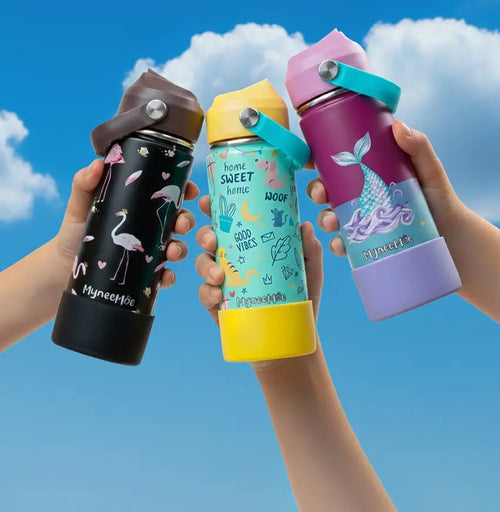
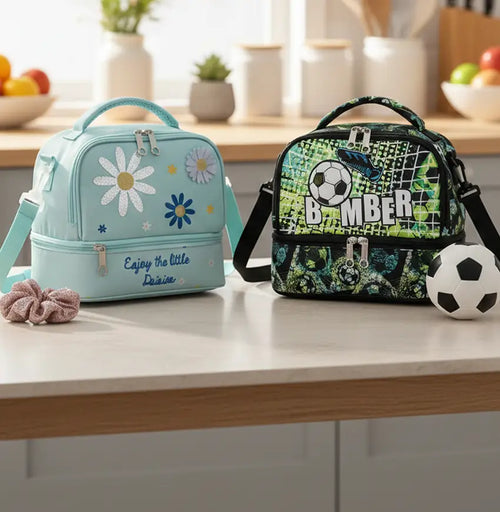
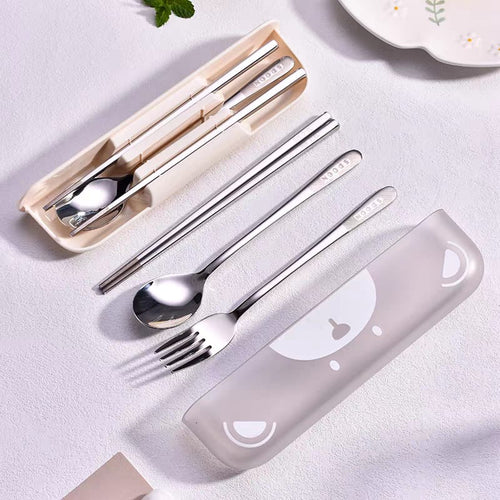

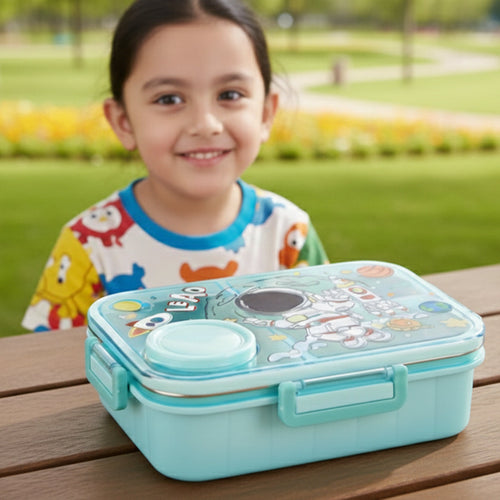
You made the perfect lunch. The dal would soak the rotis by the time you reached school, and your lunch bag would smell like the leftover sabzi from the previous day. Is it something that you've experienced before?
A leaking lunch box is demoralising for your child and wasteful for you. Yet most parents buy a lunch box based on looks alone, only to discover the leak problem after the first use. The truth is, a genuinely leakproof lunch box in India needs to pass several checks before it earns a place in your child's school bag. Material, seal type, lid mechanism, size, and safety all matter. This guide walks you through every single one, so you buy right the first time.
The Seal: Where Most Lunch Boxes Fail
Seal = Everything. Your lunchbox may be built to last, made with top-grade materials, but without the perfect seal, the dal will leak out no matter what.
What a Good Seal Looks Like
Look for these two things:
-
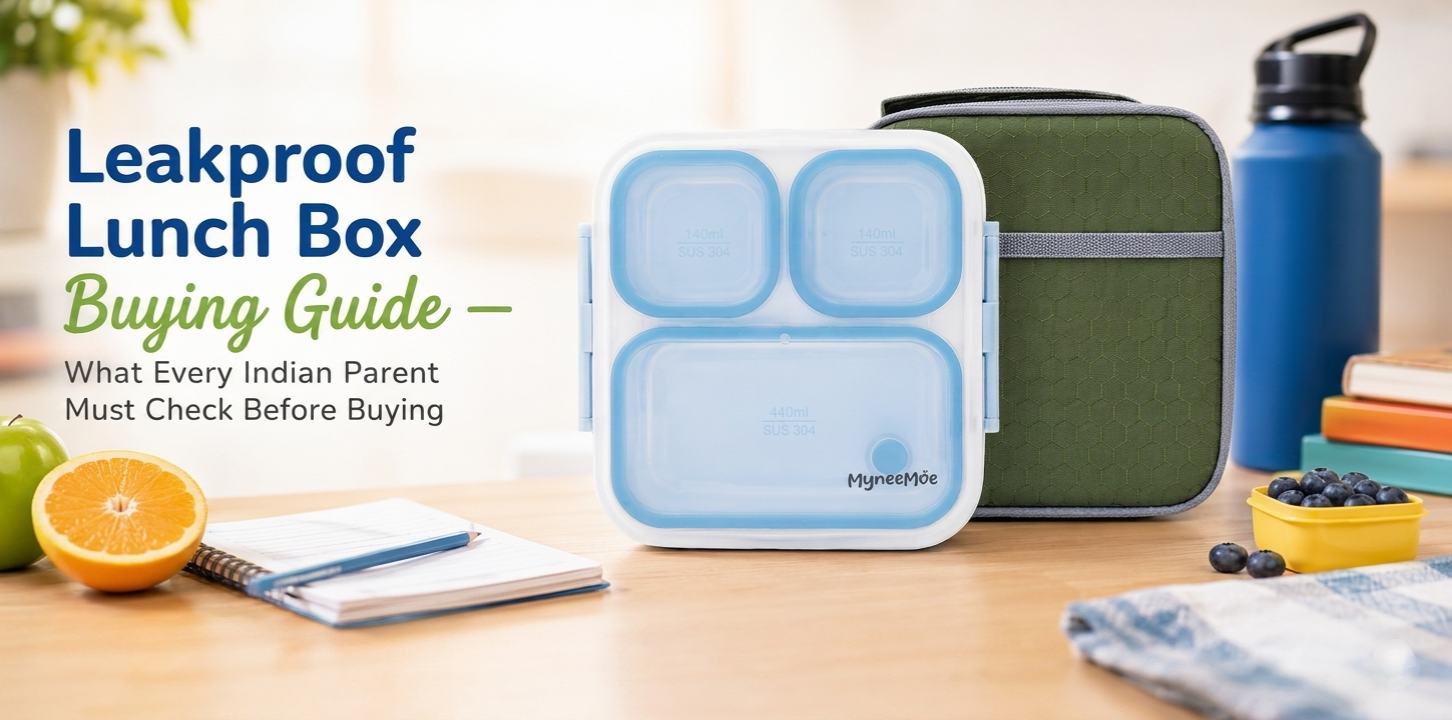
Silicone gasket lining: a soft rubber ring running along the inside of the lid. This creates an airtight barrier when the lid is pressed shut. Without it, there's always a tiny gap.
-
4-lock or multi-lock lids: clips on all four sides (not just two). A 2-lock lid flexes at the unclipped corners under pressure. 4-lock lids stay flat and fully sealed.
A quick test: fill the box halfway with water, seal it, and turn it upside down. If it leaks, it'll leak with dal too. Do this before trusting any new lunch box.
Material: Steel vs Plastic Lunch Box for Kids
This is the debate every Indian parent eventually lands on, and it matters more than most people realise.
The Case for Stainless Steel
A steel vs plastic lunch box for kids comparison almost always tips toward steel for everyday school use:
-
Stain-resistant against turmeric, tomato, and masala-based dishes
-
Does not retain any kind of smell
-
Lasts 3-5 years with frequent usage
-
Safe to use with warm food
-
Easily washable despite being greasy
Its sole drawback is that of weight. Being made up of steel, the box tends to weigh more, which may be an issue for little children.
When Plastic Is Acceptable
Plastic may work well, but only those certified to be BPA-free. BPA stands for Bisphenol A and is commonly present in low-quality plastics. BPA seeps into food when the food container gets warm. A BPA-free lunch box solves this problem.
If you're buying plastic, also check for:
-
"Food-grade" labelling
-
Thick walls that don't flex when pressed
-
No strong chemical smell when new
Avoid brightly coloured, very cheap plastic boxes. The dye and material quality are usually both poor.
Compartments: Keeping Indian Food Where It Belongs
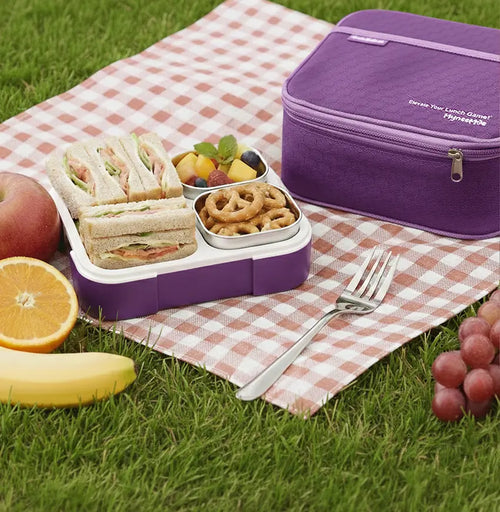
Indian food is not monotonous. Rice, sabzi, dal, roti: all have varied textures and water content. All these things should remain separate.
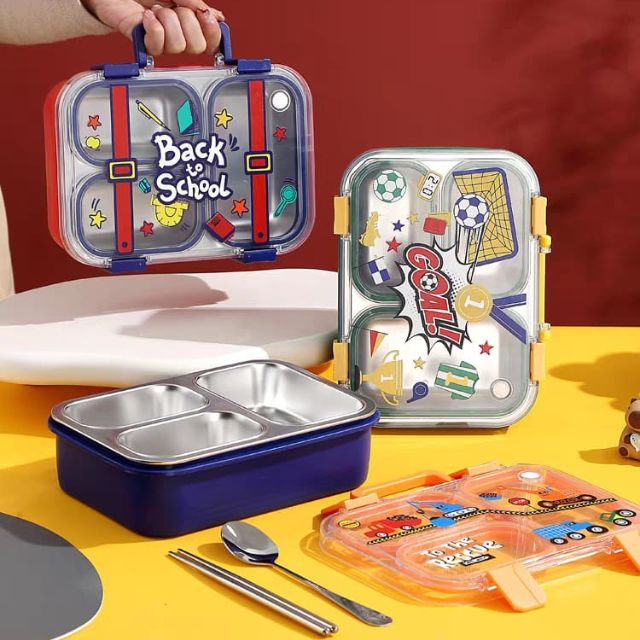
A safe lunch box for school should have:
-
2-3 compartments of different sizes
-
1 large compartment for storing rice or bread
-
1 bigger compartment for semi-solid items such as dhal and curry
-
Inner partitions to separate each compartment from the other, so that no food spills over into other compartments
A BPA-free bento lunch box with compartments is ideal here; it handles the variety of Indian meals without everything becoming one unhappy mix.
Lid Mechanism: Ease of Use for Kids
A lunch box your child can't open independently is a problem. You won't be there at lunchtime.
What to Check
-
Clip resistance, clips should be firm enough to stay sealed in a bag, but loose enough for a child's fingers to open without a struggle
-
Single-hand opening, test if your child can manage it alone before buying
-
Lid storage: Does the lid have somewhere to rest while eating, or will it fall and roll under the bench?
For younger children (Classes 1–3), look for wider, easier clips. Older kids can handle tighter 4-lock mechanisms.
Size: Matching the Box to Your Child's Appetite
This one’s often neglected more than it should. If the box is too large, there’s an incentive to put more in, resulting in spills. If too small, your child will be hungry by Period 3.
General sizes chart:
-
For Toddlers & Nursery to KG: 400–500ml
-
For Classes 1-3: 600-750ml
-
For Classes 4-6: 800-1000ml
-
For Class 7 and beyond: 1000ml
Play it safe by going small rather than big. A tightly packed lunch moves more easily than a loose and poorly packed lunch, with food items bumping into each other.
The Best Leakproof Tiffin Checklist
When purchasing, go through this checklist first:
-
Silicone gasket seal in the lid
-
4-lock or multi-point locking clips
-
Either stainless steel or BPA-free plastic
-
Minimum of 2-3 compartments
-
A size that will fit your child’s age
-
Easy clips that your child can open themself
-
Safe for dishwashers or hand washing
-
Passed the water-flip test at home
If a lunch box checks all eight, it's genuinely worth buying. If it misses the seal or the material test, move on.
Conclusion
The perfect lunch box is what separates a nice, warm meal from a sad, soggy mess at the bottom of a kid’s backpack. What makes the best leak-proof tiffin for your kid? The answer lies in getting all four things, the seal, material, compartments, and dimensions, right.
Lunch boxes like those by MyneeMoe are made specifically keeping such criteria in mind, like using stainless steel, silicone seals, and compartments for authentic Indian meals. It won’t take you long to understand what to look for when buying one.
FAQs
Q1: Are all leakproof lunch boxes actually leakproof?
Not really, since there are many lunchboxes that are advertised as leak-proof, but only contain either 2-point locking lids or none. There must be a silicone seal and four-lock clips. The test is simple, just do the water test at home!
Q2: Is a steel lunch box better than plastic for school kids?
For daily school use, stainless steel is generally the better choice. It doesn't stain, doesn't absorb smells, and lasts significantly longer than plastic. It's also safer with warm food since there's no risk of chemical leaching.
Q3: What does BPA-free mean on a lunch box?
BPA (Bisphenol A) is a chemical in some plastics that can migrate into food, especially when it's warm. A BPA-free lunch box is made without this chemical, making it safer for food contact, particularly for children.
Q4: Can I pack hot food in a leakproof lunch box?
The vast majority of leak-resistant lunch boxes are capable of handling heated food, but not boiling ones. Food should be left to cool down for 3-5 minutes before being placed inside the box to prevent pressure from developing.
Q5: How do I know if the compartments are truly sealed from each other?
Pack two different-coloured foods (or liquids) in adjacent compartments and check after 30 minutes. If colour has bled across, the inner walls aren't properly sealed. Good bento boxes have tight, raised dividers that prevent cross-contamination.
Q6: Won't a steel lunch box be too heavy for a young child?
It depends on the size. A compact stainless steel lunch box in the 500–700ml range is only marginally heavier than plastic equivalents. For toddlers and early primary kids, choose smaller formats to keep the weight manageable.
Q7: How often should I replace my child's lunch box?
A good stainless steel lunch box should last 3–5 years. Replace it sooner if the silicone gasket tears or hardens (compromising the seal), if the lid clips break, or if the box develops deep scratches on the interior.